
Insights
Ideas for the Human Work
That Still Matters.
Thoughts, stories, frameworks, and practical teaching on the human value that shapes leadership, communication, relationships, reinvention, and performance.
Featured
What You Carry Into Every Room
Your title opens the door. What you have built within yourself decides what happens once you are inside it.
Read the article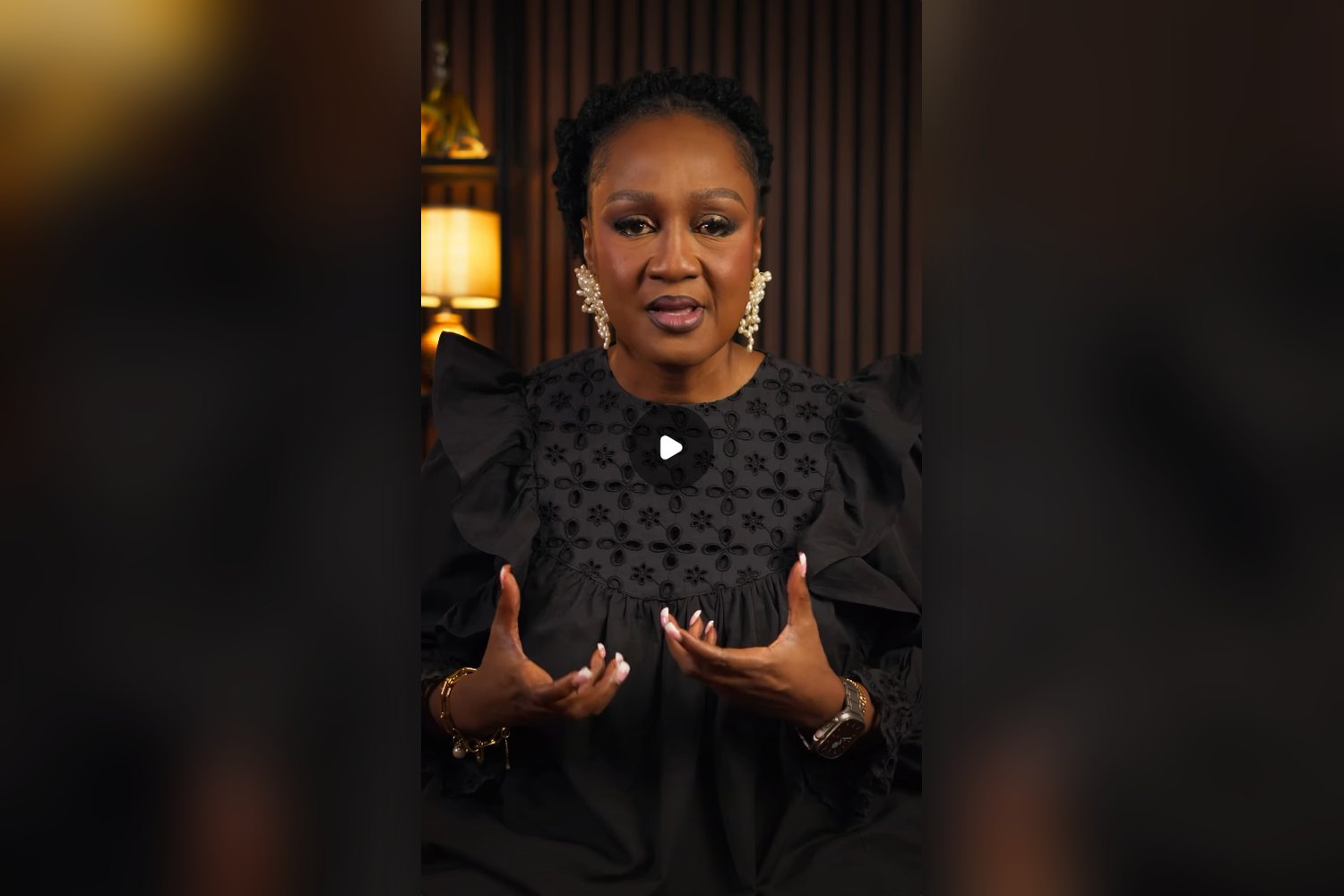 Featured · Watch on Instagram
The Work Nobody Sees Is Building You
Before people see the result, there is usually a construction site nobody sees. Discover why capability, discipline, judgment, and depth are built long before visibility arrives.
Watch on InstagramExplore by topic.
Filter the library to what you need right now.
Built, Underbuilt, or Depleting?
Most people have never been shown where their own currencies sit. A short primer on the three states and why they matter.
Leading When the Title No Longer Carries You
Roles shift faster than they used to. What leaders must build within themselves when the org chart stops doing the work.
Presence Is a Practice, Not a Personality
Expressive Currency is built, not born. Practical ways to make what is inside you visible and understood under pressure.
 Watch on Instagram
Confidence Is Something You Collect
Confidence isn’t something you wait to feel. It’s built through the evidence you create every time you keep a promise, face discomfort, and prove to yourself that you can be trusted.
 Watch on Instagram
Performing Strength vs. Building It
Looking strong and becoming strong are not the same thing. Discover the difference between performing strength for others and building the kind of strength that carries you when nobody is watching.
 Watch on Instagram
When “Fine” Isn’t Really Fine
Sometimes “fine” keeps the peace on the surface while quietly starving a relationship underneath. Learn why honest communication creates stronger relationships than comfortable silence.
Trust Is How Your Value Travels
Relational Currency is the channel your other currencies move through. On empathy, influence, and stakeholder intelligence.
Rebuilding From What Remained
When what you built around you changes, what you built within you is what remains. A note on reinvention.
 Watch on Instagram
Your Reputation Opens Doors. Your Relationships Keep Them Open.
Opportunities don’t only come from what you know. They travel through people who remember how you made them feel. Discover why relationships are one of the most valuable forms of Human Currency.
What AI Can't Carry For You
Some value cannot be delegated to a model. The parts of currency that stay stubbornly, usefully human.
No pieces here yet. Try another topic, or start with the featured insight.
More insights are on the way.
What you build within you travels further than what you build around you.
— DKD
Start where every path starts; what you carry.
See what is built, what is underbuilt, and what may be quietly depleting across your four Human Currencies.
Take the Human Currency Mirror →What You Carry Into Every Room
Your title opens the door. What you have built within yourself decides what happens once you are inside it.
There is a question I have become increasingly interested in:
What do you carry into a room?
Not your CV.
Not your title.
Not the company you work for.
Not the number of people who follow you.
I mean the things that travel with you regardless of where you go.
Your judgment. Your ability to communicate. Your emotional capacity. Your confidence. Your ability to build trust. Your capacity to handle pressure.
Those things are less visible than a qualification or a job title. But they often determine what happens after the introduction.
That is what I call Human Currency™.
Human Currency is the value you have built within yourself that travels with you from room to room, role to role, relationship to relationship, opportunity to opportunity.
And unlike a title or position, it cannot simply be handed to you.
It has to be built.
The opportunity is not the same as the capacity to carry it.
We spend a great deal of our lives asking for bigger opportunities.
The promotion. The bigger client. The larger business. The international stage. The visibility.
There is nothing wrong with wanting those things.
But there is another question we don't ask often enough:
If the opportunity arrived tomorrow, could you actually carry it?
I have watched people receive things they had wanted for years and discover that receiving something and having the capacity to carry it are not the same thing.
Someone gets promoted and suddenly has to manage people who used to be their peers.
Someone's business grows and suddenly the decisions are bigger, the pressure is heavier, and more people depend on them.
Someone becomes highly visible and discovers that visibility brings criticism, expectation and scrutiny alongside opportunity.
The opportunity did not create the weakness.
It revealed what had not yet been built.
That is why preparation for the next level cannot only be about acquiring more knowledge.
Sometimes the work is becoming a person who can carry more.
What travels with you?
I think about Human Currency through four interconnected dimensions.
Inner Currency
This is what happens inside you.
Your self-awareness. Your emotional regulation. Your confidence. Your judgment. Your ability to recover.
Pressure does not only test what you know.
It tests who you have become.
And what you carry internally eventually becomes part of the environment around you.
Capability Currency
This is your ability to do.
Not simply what you know, but what you can consistently execute.
The judgment to apply knowledge. The discipline to repeat what works. The ability to solve problems and make something real.
There is always invisible work behind visible success.
The world eventually sees the result.
But the result was built somewhere nobody was watching.
Expressive Currency
You can know something and still struggle to make it valuable to other people.
You can have an extraordinary idea that nobody understands.
You can have ten years of experience and still be unable to explain what you actually do.
What you know has to travel.
Your ability to articulate, simplify, tell the story and communicate your value determines whether people can experience what you carry.
Relational Currency
Then there is the value you build between people.
Trust. Empathy. Influence. Reputation. Relationships.
People remember whether you kept your word, whether you listened, whether you created value and whether they could depend on how you showed up.
Those experiences become your relational reputation.
And over time, reputation becomes opportunity.
Your title can change faster than you do
This is one of the reasons Human Currency matters so much in leadership.
A title can change overnight.
Your capacity usually cannot.
You can become a manager on Monday. But becoming someone who can give difficult feedback, handle conflict, develop people, make decisions under pressure and regulate yourself while others are watching takes much longer.
So instead of only asking:
“What do I need to know for the next level?”
Ask:
“Who do I need to become to carry it well?”
That is a very different kind of preparation.
The invisible part of your value
Much of what makes you valuable is invisible.
Nobody sees the years you spent learning to regulate yourself.
Nobody sees the difficult conversations you finally learned how to have.
Nobody sees the mistakes that taught you judgment.
Nobody sees the private work that made you capable of handling a public opportunity.
Before people see the speech, the business, the programme, the content or the result, there was a construction site somewhere.
There were things being learned, practiced, tested and refined.
Human Currency develops in that construction site.
And visibility cannot do the building for you.
So what are you actually building?
Take a moment and ask yourself four questions:
What am I building inside myself?
Where do I need greater emotional capacity, confidence, judgment or self-awareness?
What am I becoming capable of doing?
What skill or capability would make the biggest difference to the level I want to reach?
Can people experience what I know?
Do people understand my value, my perspective and what I bring?
What happens to people when they interact with me?
Do my relationships create trust, clarity and possibility?
These questions take you somewhere deeper than a traditional career-development plan.
Because the goal is not simply to become more impressive.
It is to become more capable of carrying what you are asking for.
The room is only part of the opportunity
We spend so much time preparing to get into the room.
Prepare the CV.
Prepare the pitch.
Prepare the presentation.
Prepare the introduction.
But what happens after you get there?
Can you think clearly?
Can you listen?
Can you communicate what you know?
Can you build trust?
Can you recover when something goes wrong?
Can you lead when the answer isn't obvious?
Those are the things that determine what happens once the door opens.
And that is why your greatest asset is not necessarily the opportunity you are pursuing.
It is the person you are becoming while preparing to carry it.
Speak What You Carry™
There is a natural connection between Human Currency and another question I have spent years exploring:
What happens when what you have built inside you is not being fully experienced, understood or expressed by the room?
You may have the experience.
The expertise.
The story.
The capability.
The perspective.
But if you cannot translate those things into something another person can understand, experience and respond to, some of your value remains trapped inside you.
That is part of the work behind Speak What You Carry™.
Because building what you carry is one part of the journey.
Learning to speak, express and translate what you carry is another.
The goal is not simply to become louder.
It is to become clear enough, grounded enough and skilled enough to allow what is already valuable within you to travel.
Your next level may not need more from the world.
It may require more from you.
Before you ask for the bigger room, ask whether you are building the person who can carry it.
Before you ask for more visibility, ask what that visibility will reveal.
Before you ask for the promotion, ask what the promotion will demand from you.
And before you ask the world to recognize your value, become honest about the value you are actually building.
Because the goal is not merely to get into bigger rooms.
It is to carry something worth experiencing once you arrive.
Built, Underbuilt, or Depleting?
Most people have never been shown where their own currencies sit. A short primer on the three states and why they matter.
We are used to measuring ourselves by outcomes.
Did I get the promotion?
Did the business grow?
Did the client say yes?
Did people listen?
Did the relationship work?
But Human Currency asks a different question:
What is happening underneath the outcome?
Because two people can have similar opportunities and produce completely different results.
One may have developed the inner capacity, judgment, communication and relational intelligence required to carry the opportunity.
The other may have technical ability but gaps underneath it.
That is why Human Currency can be understood through three states:
Built. Underbuilt. Depleting.
Built
A built currency is one you can reliably draw on.
You don't have to be perfect.
You simply have developed enough capacity that the quality remains available when you need it.
A leader who can stay grounded under pressure.
A professional who can explain complex ideas simply.
A founder who can make decisions without constantly outsourcing judgment.
A relationship-builder who creates trust consistently.
Built does not mean finished.
It means developed enough to deploy, refine and compound.
Underbuilt
Underbuilt means the potential is there, but the capacity has not yet been developed consistently.
You may know what to do but struggle to do it under pressure.
You may have expertise but struggle to communicate it.
You may care deeply about people but avoid difficult conversations.
You may have ambition but lack the internal structure to sustain it.
This is not failure.
It is information.
The question becomes:
What needs deliberate development?
Depleting
A currency can also become depleted.
The capability may still exist, but access to it is being compromised.
Pressure.
Overextension.
Misalignment.
Unresolved conflict.
Constant performance.
Too much responsibility without enough recovery.
So the goal isn't to ask, “What's wrong with me?”
It is to ask:
“Which part of my Human Currency needs attention right now?”
That question changes everything.
The four questions
Ask yourself:
- Inner: What am I carrying internally?
- Capability: What can I reliably do?
- Expressive: Can people understand and experience what I know?
- Relational: What happens to trust when people interact with me?
You don't need to improve everything at once.
You need to diagnose honestly.
Because once you know what is built, what is underbuilt and what is depleting, you can stop treating every challenge as a personality problem.
You can start building deliberately.
Human Currency is not a verdict on who you are. It is a picture of what you have built and what you can build next.
Leading When the Title No Longer Carries You
Roles shift faster than they used to. What leaders must build within themselves when the org chart stops doing the work.
A title can get you introduced.
It cannot make people trust you.
A title can give you authority.
It cannot give you judgment.
A title can give you responsibility.
It cannot automatically give you the capacity to carry it.
This is one of the most important transitions in leadership: the moment when what used to make you successful is no longer enough.
The exceptional individual contributor becomes a manager.
The manager becomes an executive.
The founder becomes the leader of a growing organization.
The person who once solved the problem now has to build people who can solve it without them.
That transition requires a different kind of currency.
From doing to carrying
Earlier in your career, your value may be measured by what you can personally accomplish.
As your responsibility grows, your value increasingly depends on what you can enable.
Can your team think without you?
Can they make decisions?
Can they disagree with you?
Can they recover from mistakes?
Can they bring bad news early?
That is the leadership shift.
Your reaction becomes culture
Your team is constantly studying you.
Not only what you say.
Your reactions.
If someone brings you bad news and you immediately become angry, people learn to hide bad news.
If you punish disagreement, people learn to agree.
If you make every decision, people stop developing judgment.
If you constantly rescue people, they may never learn to carry responsibility.
Your inner currency therefore becomes organizational currency.
The question every leader should ask:
What becomes possible for other people because I am in the room?
That is a better leadership question than:
How important am I?
The goal is not to make yourself indispensable.
It is to make your contribution transferable.
To build people.
To build systems.
To build judgment.
To build trust.
To build a culture where the organization can continue to move even when you are not present.
Because leadership maturity is not measured by how much depends on you.
It is measured by how much you have helped others become capable of carrying.
Presence Is a Practice, Not a Personality
Expressive Currency is built, not born. Practical ways to make what is inside you visible and understood under pressure.
Some people walk into a room and seem naturally confident.
They speak clearly.
They hold attention.
They seem composed.
We often call that presence.
But presence is not simply a personality trait.
It is a practice.
And like every form of Human Currency, it can be developed.
Presence begins before you speak
Presence is not volume.
It is not having the strongest accent.
It is not having the most polished vocabulary.
It is not trying to sound like someone else.
Presence begins with internal clarity.
When you know what you are saying, why it matters and what you want the room to understand, your communication changes.
You stop filling silence.
You stop over-explaining.
You stop trying to prove that you belong.
You start communicating.
The problem isn't always confidence
One of the strongest examples is the distinction between being known and being commercially understood.
That is an expressive problem.
And it matters because value that cannot travel is difficult to recognise.
Practice three things
Clarify.
What exactly are you trying to say?
Translate.
How does the person in front of you need to hear it?
Hold.
Can you stay grounded when the room doesn't immediately respond the way you hoped?
That last one is especially important.
Presence under pressure is not about controlling the room.
It is about staying connected to yourself while remaining responsive to the room.
You don't need to become louder
You may simply need to become clearer.
You may need to stop borrowing another person's communication style.
You may need to trust your own voice.
You may need to learn how to turn ten years of experience into one sentence someone else can understand.
That is expressive Human Currency.
You do not build presence by performing a version of yourself. You build it by becoming more fully able to express the value you already carry.
Trust Is How Your Value Travels
Relational Currency is the channel your other currencies move through. On empathy, influence, and stakeholder intelligence.
You can be brilliant and still be difficult to trust.
You can be experienced and still be difficult to work with.
You can be highly capable and still find that opportunities don't travel toward you.
Why?
Because human value rarely moves in isolation.
It moves through relationships.
Trust is accumulated
Trust is not created by one impressive conversation.
It is accumulated through patterns.
People don't only ask:
“Is this person good?”
They ask:
“Do I know what I can expect from this person?”
That is why consistency matters.
Relationships are not transactions
One of the most powerful lessons I’ve learned came from the experience of rebuilding after a previous business collapsed.
The expected support did not come primarily from the most powerful contacts.
It came from people who remembered being helped, encouraged, advised or treated with dignity years earlier.
That is relational capital.
You cannot manufacture it at the moment you need it.
You build it before you need it.
What do people remember about you?
Not every interaction has to be extraordinary.
But people remember:
Whether you listened.
Whether you kept your word.
Whether you made space for them.
Whether you were generous.
Whether you disappeared when you no longer needed something.
Whether you treated people differently based on their status.
Whether they felt safer, clearer or more capable after interacting with you.
Those experiences become your relational reputation.
And over time, reputation becomes opportunity.
The practical question
Think about three people you have genuinely helped.
Not people who owe you.
People you have contributed to.
When did you last check in without needing anything?
Relational Currency compounds in the ordinary spaces between transactions.
Your next opportunity may not come from a stranger.
It may come through a relationship you have already built.
Your reputation may introduce you. Trust is what makes people willing to carry your name into another room.
Rebuilding From What Remained
When what you built around you changes, what you built within you is what remains. A note on reinvention.
There are seasons when life removes something you thought would remain.
A business changes.
A role ends.
A relationship shifts.
A plan fails.
An identity no longer fits.
And suddenly you are standing in the uncomfortable space between what was and what comes next.
The instinct is often to ask:
“What do I do now?”
But sometimes the more important question is:
“What do I still have?”
Because reinvention rarely begins from nothing.
It begins with what remains.
Experience remains
Even when a position disappears, the judgment you developed in that position can remain.
Even when a business fails, the capability you developed building it can remain.
Even when a plan changes, the lessons can remain.
This is one of the central ideas behind Human Currency.
Some forms of value are portable.
They travel.
Rebuilding is not starting over
Sometimes reinvention looks like starting over from the outside.
But internally, you may be starting from years of accumulated capability.
You know more.
You see differently.
You understand people better.
You have made mistakes you don't need to repeat.
You know what matters.
You know what doesn't.
You have developed relationships.
You have built judgment.
The question is no longer:
“How do I become the person I was before?”
It becomes:
“What can I build from who I am now?”
Ask yourself
What did I build that still belongs to me?
What did the experience teach me?
What capability did I develop?
What relationships remain?
What do I understand now that I didn't understand before?
And perhaps most importantly:
What would I build if I stopped trying to recreate what I lost?
That question can open an entirely different future.
Because sometimes what looked like an ending was simply the removal of the structure around something that had become ready to evolve.
You are not starting from zero. You are starting from what remains.
What AI Can't Carry For You
Some value cannot be delegated to a model. The parts of currency that stay stubbornly, usefully human.
AI can write.
AI can summarize.
AI can analyse.
AI can generate.
AI can help us move faster than we could before.
And that is precisely why a more important question is emerging:
What remains uniquely valuable about the human being using the tool?
Because the more technology can do, the more important it becomes to understand what it cannot carry for you.
AI can process information. It cannot live your consequences.
You can ask a model to give you ten options.
You can ask it to compare them.
You can ask it to identify risks.
But eventually, somebody has to decide.
And somebody has to live with the consequences.
That is why judgment matters.
Technology can inform judgment.
It cannot take responsibility for it.
AI can generate language. It cannot replace your lived experience.
Your story is yours.
Your context is yours.
Your relationships are yours.
Your understanding of a particular customer, culture, organization or community is yours.
AI can help you express those things.
But it did not live them.
That distinction matters.
AI can make you faster. It cannot decide what is worth building.
This may be the most important question of all.
If everyone has access to increasingly powerful tools, the advantage will not simply belong to the person who can produce the most.
It will belong to the person who can decide:
What is worth producing?
What problem matters?
What should be said?
What should not be said?
Who needs this?
Why does it matter?
What consequence does this decision create?
Those are human questions.
Human Currency becomes more valuable
The rise of AI does not make human development irrelevant.
In many ways, it makes it more urgent.
Your judgment matters more.
Your ability to communicate matters more.
Your relationships matter more.
Your capacity to discern matters more.
Your ability to build trust matters more.
Your ability to remain grounded while technology accelerates everything around you matters more.
The question is no longer simply:
“What can AI do?”
It is:
“What kind of human do I need to become in a world where AI can do more?”
That is the Human Advantage.
And it begins with what you carry.
The more technology can do, the more valuable it becomes to know what only you should carry.